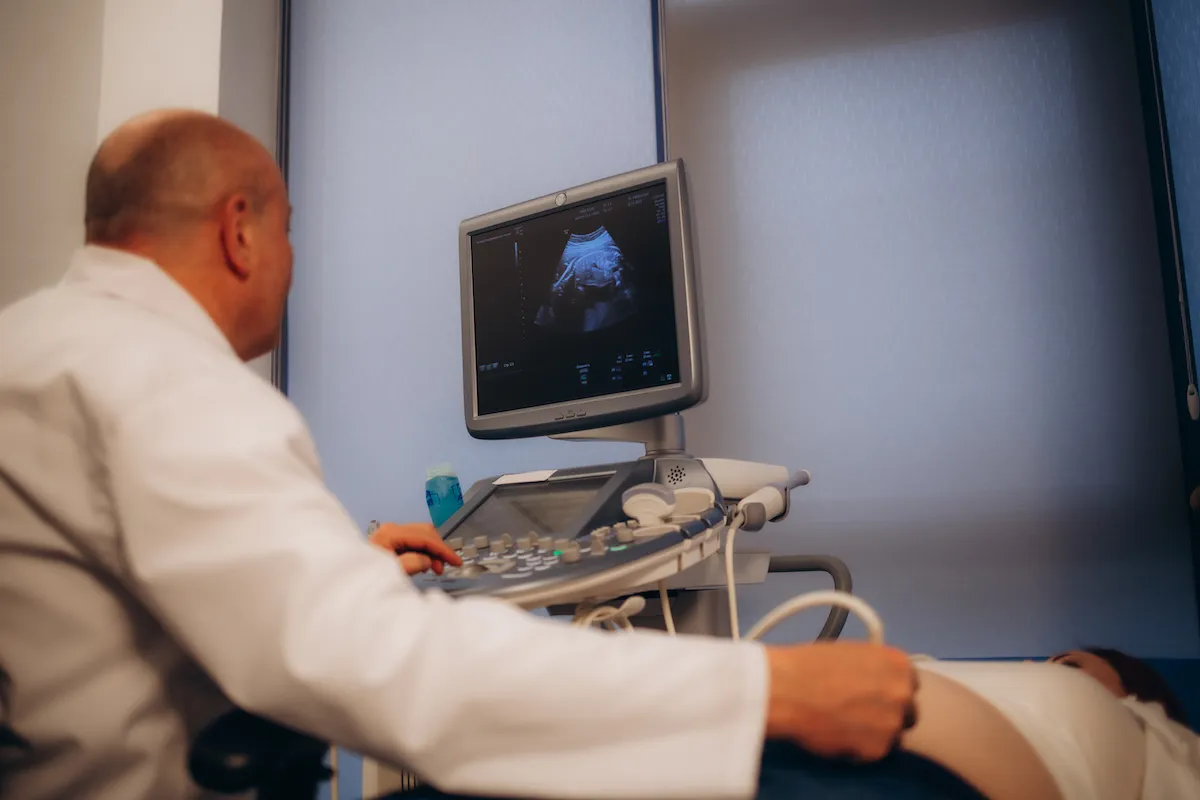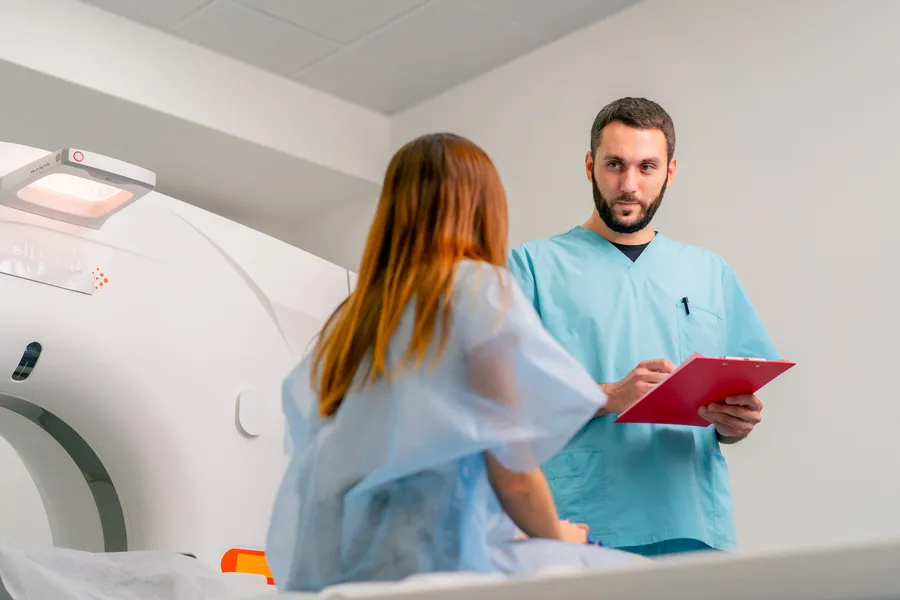
A nuclear stress test shows how well blood reaches your heart muscle at rest and when your heart is working hard. It takes about 2 hours at FCCI. It helps find coronary artery disease, shows the effects of past heart attacks, and helps estimate the risk of future ones.
How the test works
A small amount of tracer is given through an IV twice: once at rest and once under stress. Areas of heart muscle with good blood flow pick up the tracer. Areas fed by narrowed arteries pick up less.
The stress part comes from walking on a treadmill or, if walking is hard for you, from a medicine that makes your heart act like it is exercising. A very sensitive camera then takes still pictures and movies of your heart, shown in 3D.
Why doctors order it
Your provider may order a nuclear stress test if you have chest discomfort, shortness of breath with activity, an abnormal EKG, or risk factors for heart disease. FCCI's Nuclear Cardiology Lab calls nuclear cardiology a staple in diagnosing and managing coronary artery disease, and the lab performs over 3,000 stress tests a year with board-certified technologists.
How to prepare
FCCI gives written Nuclear Stress Test instructions, and they matter. Follow your sheet exactly. In general:
- Read your instructions as soon as you get them
- Ask whether to hold any medicines, and do not stop one on your own
- Wear comfortable clothes and walking shoes
- Plan for about 2 hours
- Bring a list of your medicines
If you have questions about your prep, call before the day of your test so nothing needs to be rescheduled.
During and after
Technologists will place stickers on your chest to watch your heart rhythm and check your blood pressure through the test. Tell them right away if you feel chest pain, dizziness or very short of breath. Most people go back to normal activities after the test unless told otherwise.
Your FCCI provider will review the images and talk with you about results and next steps, which may be reassurance, medicine changes, or more testing.
Other stress tests
FCCI also offers treadmill stress tests without tracer and cardiac PET scans. Your provider picks the test that fits your situation. Not every test is done at every office, so ask the Orange Park team where yours will be.
Heart care close to home in Clay County
Need a stress test closer to home? FCCI's Orange Park office at 1465 Kingsley Ave serves Fleming Island, Middleburg, Green Cove Springs and the rest of Clay County. Dr. Youssef Al-Saghir directs Clay County operations and chairs cardiology at HCA Florida Orange Park Hospital. FCCI takes most major insurance, including Medicare and Tricare, with same day testing for urgent matters.
Questions to ask your provider
- Should I hold any of my medicines before the test?
- Will I walk on the treadmill or get medicine instead?
- How soon will I hear results?
- What happens if the test shows a problem?
A neighborly word from the Clay County team
A stress test tells your doctor how your heart handles effort, and you tell them how daily life feels. Both matter. If something about your test is worrying you, note it and bring it up at your visit, or call the office and ask before test day.
Ready to talk with a heart doctor close to home? Questions about your stress test prep? Call the FCCI Orange Park office at 904.644.0092, Monday to Friday, 8 a.m. to 5 p.m., or use the appointment request form (contact details only, please). We are at 1465 Kingsley Ave, Orange Park, FL 32073.